
International Carrot Day (April 3)

International Carrot Day is on April 3, and it’s one of those holidays that makes you pause and realize how often carrots show up without getting much credit.
They’re in lunchboxes, chopped into soups, shredded into salads, baked into cake. Most of us buy them automatically without thinking about it. So giving them a day isn’t the worst idea.
Around here, it usually just means I try one new carrot recipe or turn it into a small themed activity. Nothing elaborate. Just a reason to notice what we normally overlook.
If you prefer low-key celebrations that don’t require decorations or party planning, this one fits easily into early spring.
When is the Holiday?
It’s observed on April 3 each year, although some calendars list April 4. Either way, it lands right at the start of spring, which makes sense for a root vegetable that’s often planted this time of year.
Who Invented It?
International Carrot Day began in 2003 thanks to Swedish enthusiast Gunnar Erikson, who wanted carrots to have their own moment.
It wasn’t a corporate marketing campaign. Just someone who appreciated the vegetable and thought it deserved recognition, especially for its nutritional value and versatility.
It slowly spread online and through gardening communities, which honestly feels very on-brand for carrots.

A Little Background
The early April timing lines up with carrot planting season in parts of Europe, including Sweden. So the day connects naturally to gardening and growing food.
Carrots themselves have been cultivated for over a thousand years. And despite what we assume, they weren’t always orange. Earlier varieties were purple, red, yellow, and even nearly black before selective breeding made orange dominant.
It’s funny how something so ordinary now has such a long, colorful history.

Fun Facts About Carrots
The longest carrot ever recorded measured an incredible 20 feet and was grown in the UK by a particularly determined gardener.
Orange wasn’t always the standard color. Earlier varieties were often purple, red, or nearly black before selective breeding made orange dominant.
There is a virtual Carrot Museum online that collects unusual trivia, historical facts, and carrot-related artwork.
In some medieval markets, bundles of carrots were valuable enough to be traded for everyday goods.
Because of their beta-carotene content, carrots can fluoresce slightly under UV light, a science tidbit kids usually find fascinating.
Coloring Page
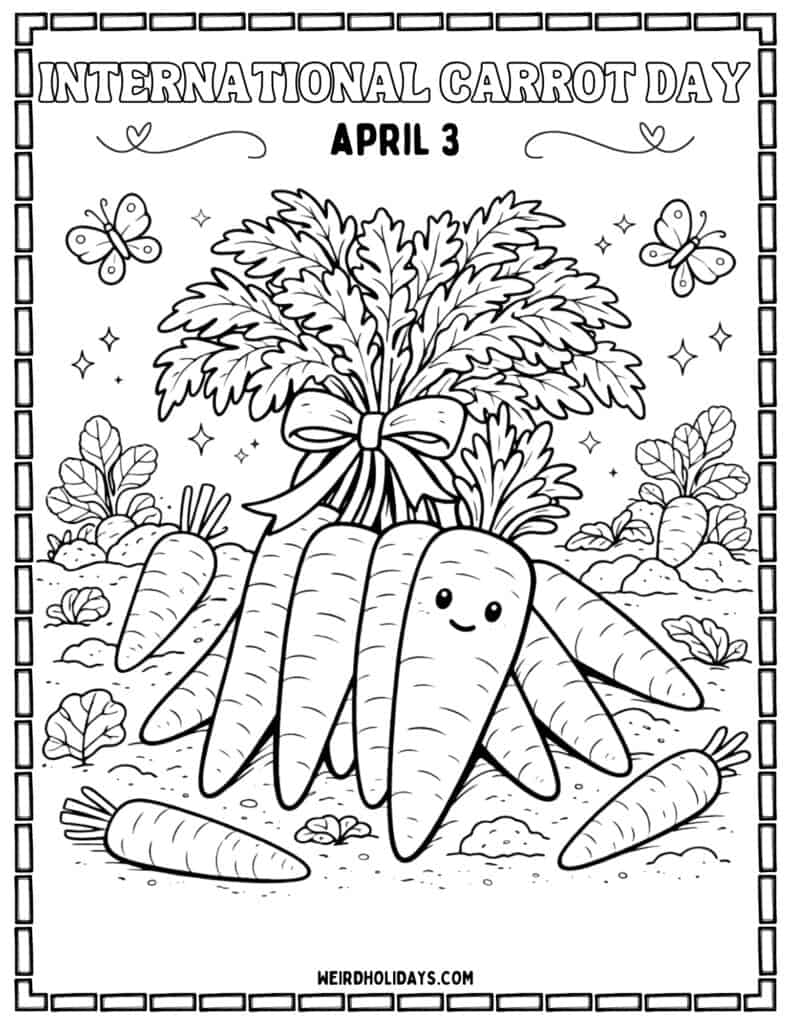
If younger kids are around, a simple carrot coloring sheet is an easy addition while you’re cooking or talking about how carrots grow. It doesn’t have to be more complicated than that.
Activities to Celebrate
The nice thing about this holiday is that you don’t have to go out of your way.
One of the simplest options is just cooking something carrot-focused together. Roasted carrots with olive oil and salt are surprisingly good. Carrot muffins feel like a treat but still count as vegetables. Even letting kids peel and grate carrots gives them a little ownership.
If you’ve got outdoor space, planting carrot seeds works well this time of year. They don’t need much room, and watching the thin green tops appear feels oddly satisfying.
A small taste test can also be fun, raw sticks, roasted slices, maybe quick pickled carrots side by side. Comparing texture and sweetness sometimes changes opinions more than lectures ever do.
And if you want to stretch it into learning, you can talk about how carrots grow underground, how beta-carotene converts to vitamin A, or why different varieties have different colors.
It can stay simple and still feel intentional.

Related Recipes for the Holiday
Carrots work in more places than we give them credit for.
Quick pickled carrots are great in sandwiches and grain bowls. They’re tangy, crisp, and keep well in the fridge.
A Japanese-style carrot ginger dressing brightens up plain salads and takes about five minutes to blend.
Vegan carrot “hot dogs” are one of those recipes that sound strange until you try them. Once marinated and roasted, they’re surprisingly convincing.
Honey-glazed carrots are reliable and kid-friendly. A little butter, a little honey, maybe cinnamon.
Carrot cake with cream cheese frosting is probably the reason some people tolerate vegetables at all.
And roasted carrot soup, especially when blended smooth, turns simple ingredients into something that tastes far more impressive than the effort required.

Links to Resources
If you’re teaching or just adding a little learning, a life cycle of a carrot worksheet pairs nicely with the day.
A simple carrot-themed craft can work for younger kids, especially if they like hands-on activities.
And if you want to make prep slightly more interesting, even a quirky carrot peeler that creates thin curls can make kids more curious about trying what they helped make.
Carrot and Pea: An Unlikely Friendship – A simple, sweet story about an unlikely friendship between a carrot and a pea, perfect for younger kids and an easy tie-in for the day.

Related Holidays
- National Carrot Cake Day (February 3) – A perfect follow-up for anyone who prefers their carrots on the sweeter side. It’s a great excuse to bake a classic carrot cake or try a new spiced dessert recipe.
- Eat Your Vegetables Day (June 17th) – This one encourages kids (and adults) to give veggies a little more attention. It pairs well with simple food challenges or taste tests if you’re trying to expand picky eaters’ menus.
- National Potato Day (August 19) – Another popular root vegetable gets its moment here. Families often mark the day with comfort foods like baked potatoes, fries, or easy potato side dishes.
Pin it!
Share this post about International Carrot Day on Pinterest!
