
National Biscuit Day (May 29)

May 29th is one of those food holidays that means something slightly different depending on where you are in the world, which makes it more interesting than most. In the US a biscuit is soft, flaky, and served warm with butter or gravy.
In the UK it’s what Americans would call a cookie, something firm and sweet that goes with tea. Both are worth celebrating and National Biscuit Day covers the full spectrum without taking sides.
When is the Holiday?
Every year on May 29th.
Who Invented It?
No official founder. It likely came from the baking industry or culinary communities who recognized that biscuits, in their various forms, are universally loved and chronically underappreciated as a category. The holiday doesn’t have a founding story but it has a good premise.

The History of the Holiday
The word biscuit comes from the Latin bis coctum, meaning twice-baked, which tells you something about the original method. Early biscuits were hard, dry, and designed to last, closer to ship’s biscuits than anything you’d find on a brunch table today. The form evolved considerably over time and in different directions depending on the country.
In medieval Europe, twice-baked biscuits were practical food for long journeys. In Britain, the tea biscuit developed into an entire category of its own with hundreds of varieties. Shortbread, once considered a luxury reserved for special occasions, became an everyday product.
In the American South, the biscuit took a completely different path, becoming a soft, leavened bread made with buttermilk and served at almost every meal. NASA has even developed space-friendly biscuit products for use on missions, which is a long way from medieval ship’s rations but follows the same logic of needing portable, shelf-stable food.

Top 5 Facts About the Holiday
1. The word biscuit literally means twice-baked. From the Latin bis coctum. The original biscuits were baked twice to remove moisture and extend shelf life. The modern versions bear almost no resemblance to that process but carry the name forward.
2. In the UK, biscuits are what Americans call cookies. The terminology divide causes genuine confusion and occasional disappointment at international breakfast tables. A British person offered a biscuit with their gravy would have questions.
3. Shortbread was once reserved for special occasions. The butter content made it expensive enough that it was considered a luxury and saved for holidays and celebrations. Mass production made it everyday but the quality gap between a good homemade shortbread and a standard commercial one is still noticeable.
4. NASA has used biscuit products on space missions. The need for food that is stable, compact, and produces minimal crumbs in zero gravity has driven some creative development in this category. Crumbs floating around a spacecraft are a genuine hazard.
5. Biscuit recipes are a reliable map of regional ingredients. Southern US biscuits use buttermilk and lard. Scottish shortbread uses a high ratio of butter. Italian biscotti use almonds and anise. The variations tell you where a recipe came from as clearly as any label.
Coloring Page
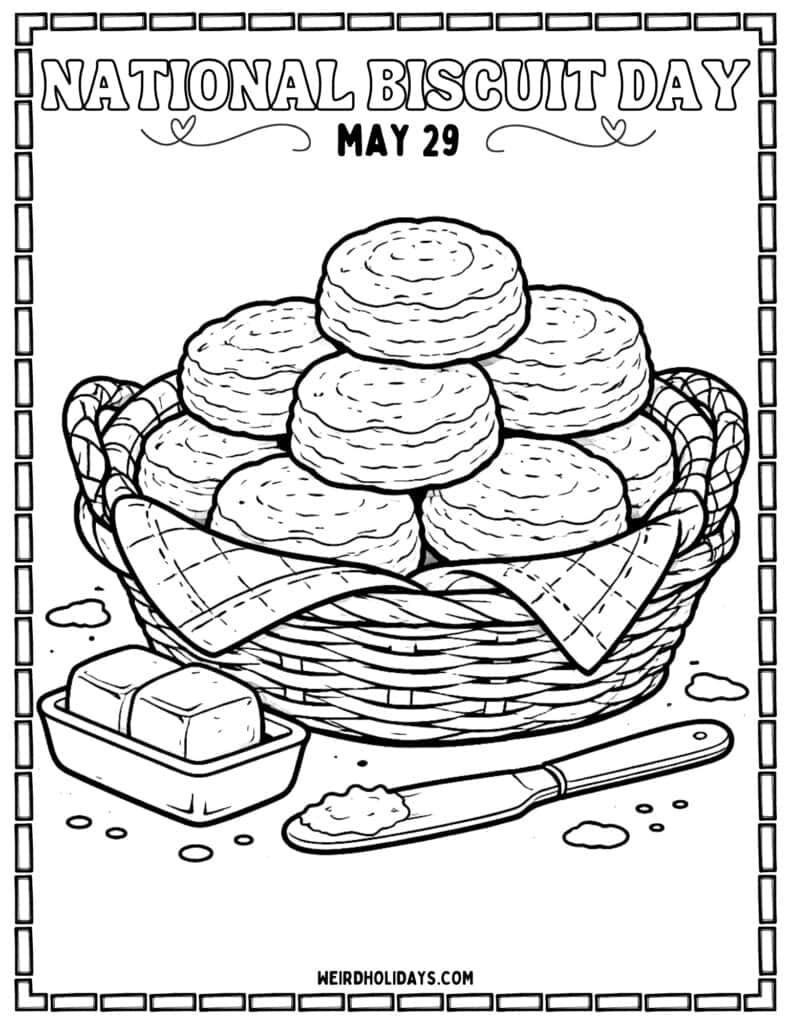
Print the biscuit coloring sheet for younger kids to use while the baking is happening. It also works as a simple craft activity alongside a biscuit decorating session for children who want to be involved without handling dough.
Activities to Celebrate
A global biscuit tasting is the most interesting version of this day and easier to put together than it sounds. Shortbread, digestives, Southern-style biscuits, biscotti, and a few less familiar varieties like Greek moustokouloura or Argentine alfajores give you a genuinely wide range. Add tea and coffee pairings and you have a proper tasting session that works for adults and older children.
Baking from scratch is the obvious choice if you want something more hands on. Butter swim biscuits are worth trying if you haven’t made them before. The method involves baking the dough in a pool of melted butter, which produces crispy edges and a rich, fluffy interior with very little technique required. A good starting point for anyone who finds biscuit making intimidating.
A biscuit brunch works well as a social occasion. Homemade biscuits with gravy, honey butter, and fruit preserves cover sweet and savory in the same spread and the format is relaxed enough that it doesn’t require much beyond the biscuits themselves being good.
Visiting a local bakery that makes biscuits by hand is worth doing if one exists near you. The gap between a commercial biscuit and one made properly with good butter is significant and worth experiencing at least once.
Related Recipes for the Holiday
- Blueberry Biscuits – fresh or frozen blueberries with a simple glaze. A good breakfast option that works well alongside the brunch setup.
- Jalapeno Cheddar Biscuits – flaky, cheesy, with a clean heat from the jalapeño. Serve warm with chili or eggs.
- Sweet Potato Drop Biscuits – earthy and slightly sweet, pairs well with butter, cinnamon, or savory spreads. A good way to use up a sweet potato that’s been sitting around.
- Butter Swim Biscuits – baked in melted butter with crispy edges and a fluffy interior. The easiest method on this list and consistently produces good results.
- Vegan Sweet Potato Biscuits – plant-based milk and coconut oil, genuinely good texture, a solid dairy-free option for a mixed group.
- Copycat Red Lobster Biscuits – cheddar and herb, brushed with garlic butter. One of those recipes people make once and then get asked for repeatedly.heddar and herb filled, brushed with garlic butter for that restaurant-style finish.
- Irish Soda Bread Biscuits – individual portions of traditional soda bread cooked in a hot skillet. Quick and satisfying with very few ingredients.

**This post may contain affiliate links. As an Amazon Associate and a participant in other affiliate programs, I earn a commission on qualifying purchases.**
Links to Resources
- Biscuit Cutters – a set with varied shapes makes the process easier and gives kids something to participate in. Worth having if you bake biscuits regularly.
- Baking Mats – reusable, non-stick, and produce more even results than a greased tray. A genuinely useful piece of kit beyond this one holiday.
- Butter Dish with Lid – keeps butter at room temperature and table-ready. Small thing that makes a noticeable difference when you’re serving warm biscuits and want the butter to actually spread.
- Pastry Blender Tool – cuts butter into flour properly, which is the step most people skip and the reason biscuits end up dense rather than flaky. Worth getting if you want consistent results.

Related Holidays
National Shortbread Day (January 6) – dedicated to one of the most traditional biscuit varieties. A good prompt to make the real thing from scratch rather than buying a tin.
National Sugar Cookie Day (July 9) – moves into cookie territory proper but shares the same decorated, shareable energy as a biscuit bake-off.
National Pie Day (January 23) – another baked goods holiday worth having on the calendar. Sweet or savory, the pie and the biscuit occupy the same comfortable corner of the food world and the overlap in technique makes this a natural one to bookmark alongside today.
National Oreo Cookie Day (March 6) – the most iconic sandwich biscuit in the world gets its own day. Worth acknowledging alongside the homemade end of the spectrum.
Pin it!
Share this post about National Biscuit Day on Pinterest!
