National Napping Day (Monday after Daylight Saving Time)

The Monday after Daylight Saving Time is never anyone’s best day.
We lose an hour, pretend it doesn’t matter, and then spend the afternoon wondering why everything feels slightly harder.
National Napping Day lands right there, on the Monday after the clocks move forward in March. It’s less about celebrating sleep and more about admitting that most of us are tired.
When is the Holiday?
It’s held on the Monday after Daylight Saving Time starts in March, the first weekday after we lose an hour.
That’s deliberate.
Who Invented It?
It was created in 1999 by Dr. William Anthony of Boston University and his wife, Camille. He’d spent years studying sleep and productivity, so the Monday after the time change felt like the obvious choice.
He even earned the nickname “Napmaster.”
The History of the Holiday
The Anthonys introduced National Napping Day in 1999 after noticing how predictable the post–Daylight Saving Time slump was. Losing an hour of sleep doesn’t sound dramatic, but most people feel it.
Rather than complain about the time change, they leaned into it. The idea was simple: if we’re going to be tired anyway, we might as well acknowledge it.
Since then, the day has stuck around as a small, practical response to a very specific Monday. It’s not a major celebration, just a quiet nod to the fact that adjusting takes time.

Facts About the Holiday
- It lands right when everyone is pretending they adjusted to the time change. Most of us haven’t.
- A short nap really does hit differently than scrolling through your phone for 20 minutes.
- The day was built around the idea that losing an hour affects more than just your alarm clock, it affects focus, patience, and reaction time.
- Not everyone can take a nap on a Monday. Which somehow makes the holiday feel slightly aspirational.
- The concept hasn’t evolved much since 1999. It’s still just: you’re tired, rest if you can.
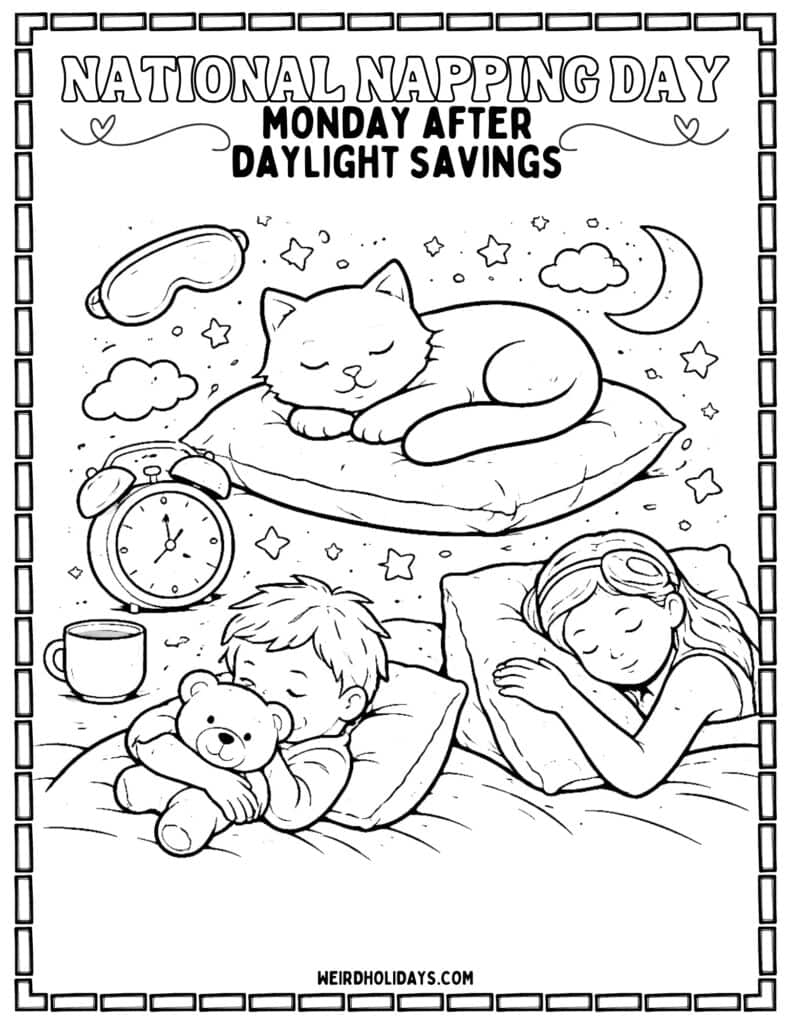
Coloring Page
If you’re celebrating with kids, this National Napping Day coloring page is an easy way to include them in the theme.
Activities to Celebrate
If you’re tired, take a nap. That’s really the whole idea.
It doesn’t need to be a perfect setup with special pillows and calming playlists. Close the door. Set a timer for 20 minutes. See what happens.
If you can’t nap, don’t overthink it. Go to bed a little earlier. Skip something nonessential. Accept that the Monday after the time change might not be your sharpest day.
Some people try the coffee-then-nap trick, drink it, lie down immediately, wake up as it kicks in. It’s strange, but it works for some.
Or just acknowledge it: losing an hour messes with people more than we like to admit.
That’s the spirit of the day.
**This post may contain affiliate links. As an Amazon Associate and a participant in other affiliate programs, I earn a commission on qualifying purchases.**
Links to Resources
If you’re leaning into the nap theme, a few simple things can help:
A supportive pillow makes a difference, especially if you’re trying to rest somewhere other than your bed.
Weighted blankets work well for some people who like that heavier, tucked-in feeling during a short rest.
And if you prefer a wind-down ritual first, a cup of chamomile tea can help you slow down before lying down.
Nothing fancy. Just small upgrades that make it easier to actually relax.

Related Holidays
Festival of Sleep Day (January 3) – A celebration dedicated to rest, relaxation, and better sleep habits.
National Lazy Day (August 10) – Encourages slowing down and embracing guilt-free downtime.
National Single Tasking Day (February 22) – A reminder to focus on one task at a time, promoting mindfulness and reduced stress—perfect alongside a well-timed nap.
Pin it!
Share this post about National Napping Day on Pinterest!